“Open Source”
My Contribution
Engagement Type
Case Study
Challenge
Google needed a unified digital destination capable of representing the breadth of its open source ecosystem while making thousands of projects, programs, documentation, and community resources easier to discover and understand. Beyond project discovery, the platform needed to communicate how Google approached open source itself—supporting education, knowledge sharing, collaboration, and greater participation across the global developer community.
Approach
I led delivery and technical strategy across teams working in Los Angeles and alongside Google stakeholders in Mountain View, coordinating developers, designers, UX and information architecture, content, and production disciplines through an approximately three-month engagement. I met regularly with Google stakeholders to maintain alignment around the broader purpose of the platform: strengthening the developer community, sharing institutional knowledge, educating contributors, and helping open source projects progress through greater collaboration.
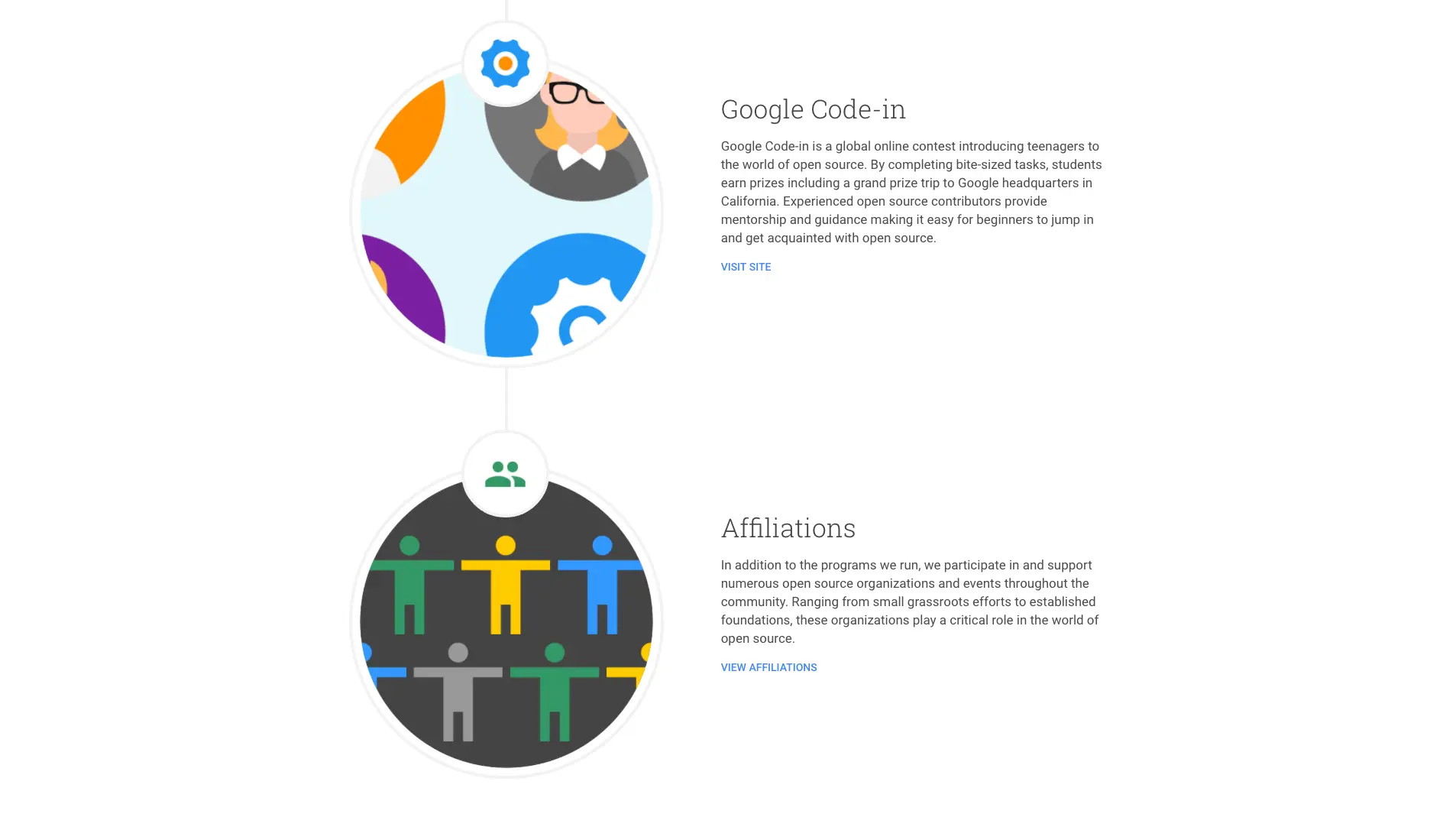
Working within Google’s established patterns, including the Grow static site generator, I helped drive the architecture and delivery approach for a responsive platform built with HTML5, CSS3, JavaScript using ES6, and YAML-driven content. The experience combined CSS transitions, SVG animation, and canvas-based visualization to make a large and highly technical ecosystem approachable without sacrificing performance, usability, or maintainability.
A central challenge was making Google’s extensive portfolio of open source work discoverable. I helped lead collaboration with Google’s Open Source team around an API-driven project experience that enabled developers to search projects and associated metadata, explore collaborators and project information, and connect directly to repositories where they could begin contributing. Throughout delivery, accessibility, responsive behavior, browser and device compatibility, performance, analytics, and launch quality were treated as core product requirements rather than final-stage considerations.
The Google Open Source website brought previously distributed initiatives into a more cohesive public experience and created a central destination for developers, contributors, and organizations seeking to understand and participate in Google’s open source ecosystem.
Impact
Delivered end to end in approximately three months, the platform launched as Google’s new public home for open source and provided a centralized way to discover projects, access documentation, understand Google’s open source practices, and participate in its developer community. The experience was built to support high-visibility moments including Google I/O and helped establish a durable foundation for Google’s ongoing open source communications and community engagement.