Domino’s DXP
“Ultimate Pizza Delivery Vehicle”
My Contribution
Engagement Type
Case Study
Launching a New Kind of Delivery Vehicle
The Domino’s DXP, or Delivery Expert, was more than a marketing concept. It was a purpose-built pizza delivery vehicle, and our challenge was to introduce that product through a digital experience with as much personality as the vehicle itself.
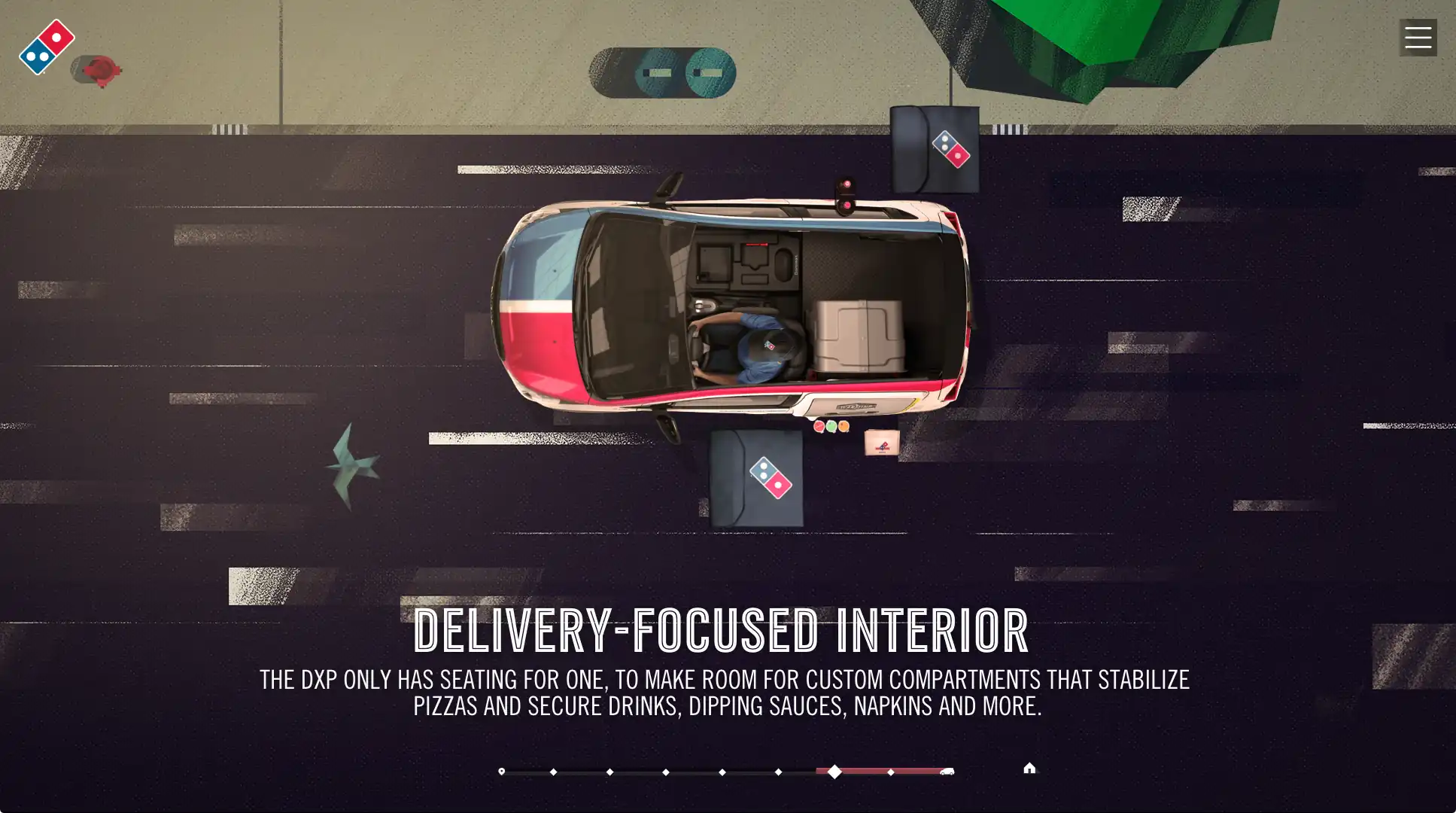
Based on a Chevrolet Spark, the DXP emerged from a multi-year effort to rethink the everyday pizza-delivery vehicle around the needs of Domino’s drivers and customers. Its specialized interior included a warming oven and storage designed around delivery, with capacity for up to 80 pizzas.
That made the assignment different from a typical product campaign. Domino’s was introducing an operational tool developed specifically for its delivery business, so the digital experience needed to explain what made the DXP different while keeping the presentation accessible, playful, and unmistakably Domino’s.
Turning Product Features into a Journey
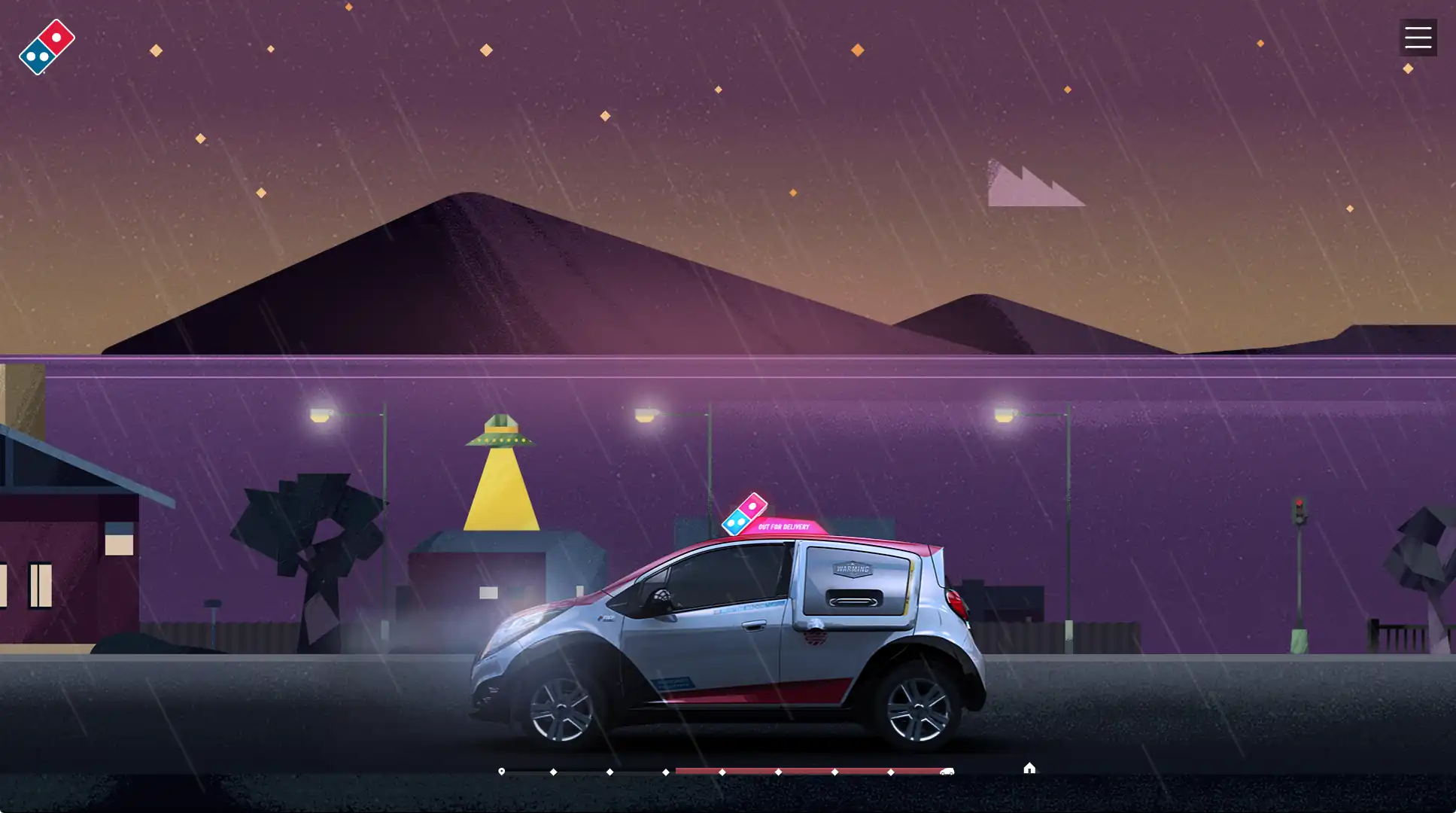
The team created a side-scrolling digital experience inspired by classic 2D games. As users scrolled, the DXP traveled through an illustrated delivery route, moving through changing environments while individual scenes introduced features of the vehicle.
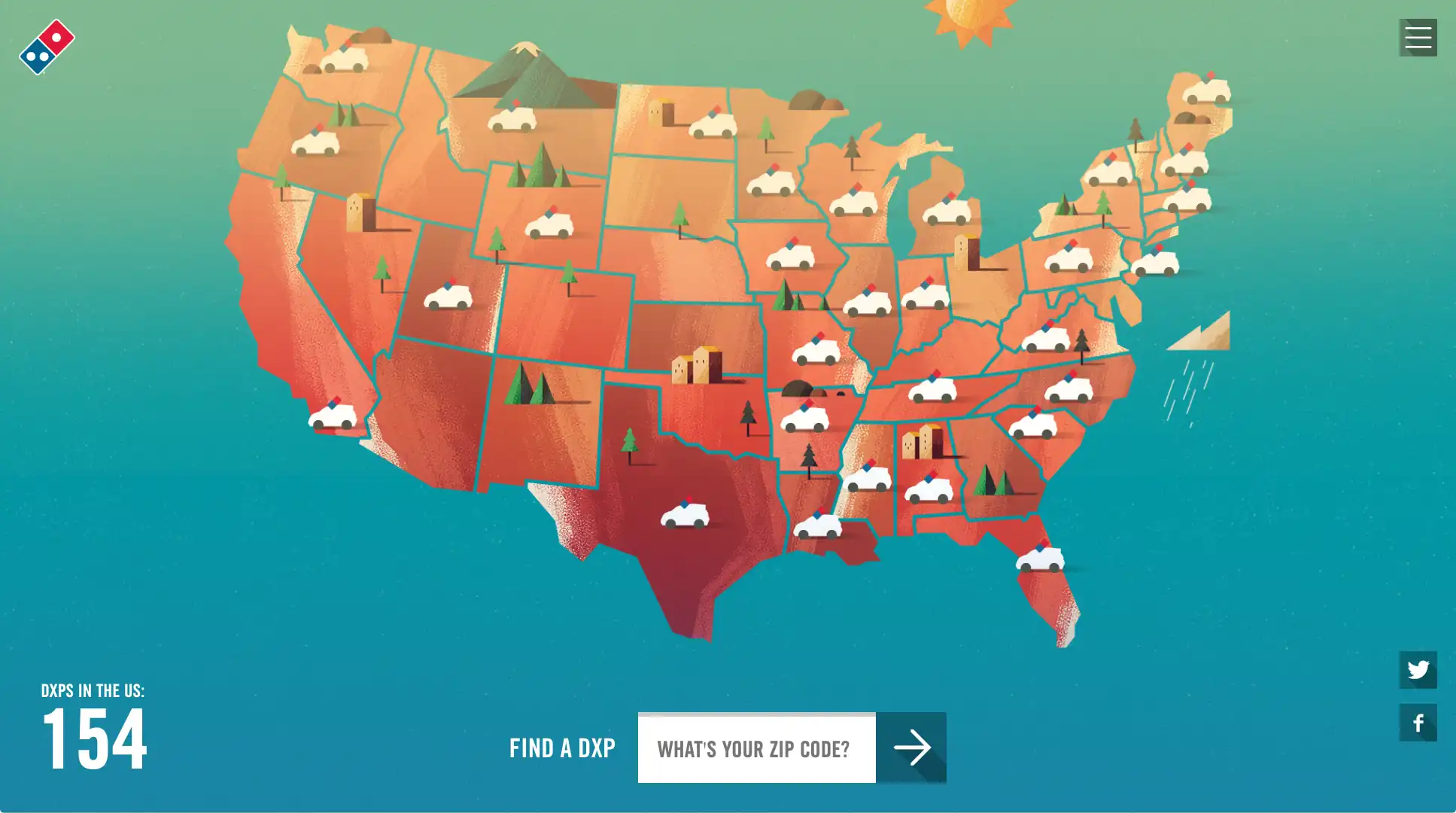
All of the graphical assets for the experience were developed in-house. Custom illustration, animation, parallax movement, and deliberately unexpected details turned what could have been a conventional automotive product tour into a playful journey. The experience concluded by allowing users to enter a ZIP code to find locations showcasing the DXP and continue into Domino’s ordering ecosystem.
I did not develop the application itself. I worked closely alongside the developers throughout production, participated in technical planning and decision-making, occasionally reported on development progress, and helped with portions of the schedule. This kept me close enough to the implementation to help connect development needs with infrastructure, delivery, and stakeholder expectations without overstating my role in writing the experience.
Technical Strategy & Stakeholder Alignment
I participated in stakeholder meetings throughout the engagement and was present for presentations and reviews as the project developed. I also took part in technical meetings where we evaluated implementation needs, made technical decisions, and planned how the experience would move toward release.
That stakeholder visibility was important because the digital product combined a distinctive creative concept with a real-world product launch. My role was to bring the technical-delivery perspective into those conversations, help communicate how development was progressing, and make sure infrastructure and deployment decisions supported what the creative and development teams were building.
Designing the Infrastructure & CDN Strategy
My clearest area of ownership was the infrastructure supporting the experience. I diagrammed the required infrastructure components and services, developed the proposed architecture, and took that approach through stakeholder approval before provisioning the environment.
I then requisitioned and configured the infrastructure, primarily on Amazon Web Services. Because the experience depended heavily on custom graphics, animation, and media, I also drove the CDN strategy, using a separate content-delivery service for static assets such as video and for edge caching.
The goal was not simply to put the site on a server. The infrastructure needed to support an asset-rich interactive experience reliably while allowing the development team to continue iterating toward launch. That meant treating content delivery, infrastructure, and deployment as part of the product-delivery strategy rather than as an afterthought.
Automating Delivery to Production
I also designed and implemented the deployment pipeline connecting the project’s Git repository to the infrastructure. The pipeline built and tested incoming changes, then delivered passing builds to the environment through an encrypted tunnel.
This created a repeatable path from development into the deployed experience and supported a production process in which developers, creative teams, and technical stakeholders were continuing to refine the product. Combined with the AWS environment and CDN architecture, the pipeline gave the team a more dependable foundation for moving builds toward release.
Supporting a Real Product Launch
The DXP digital experience supported the introduction of a real operational product, translating the engineering story and delivery-focused features of Domino’s new vehicle into an approachable interactive experience for customers.
Domino’s initially announced approximately 100 DXPs for markets across the United States. The vehicle combined the visibility of a brand initiative with a practical operational purpose, giving franchisees a delivery vehicle designed specifically around carrying pizza rather than adapting a conventional passenger car to the job.
For me, the project was an example of technical leadership that did not depend on being the person writing the application. I participated throughout stakeholder and technical discussions, worked alongside the developers, contributed to delivery planning, and took direct ownership of the infrastructure architecture, CDN strategy, production environment, and deployment pipeline supporting the experience.