Hyundai
“Sales Training”
Roles
Genres
Rebuilding Sales Training from the Ground Up
Hyundai Sales Training is an enterprise learning and certification platform built from the ground up to support Hyundai’s sales organization, from dealership sales associates to owners and the internal teams responsible for developing training programs. The platform brought vehicle and product education, courses, exams, certifications, progress tracking, reporting, streaming video, and organizational updates into a unified digital product used across the sales network.
I served as the Product Manager and Product Owner throughout the engagement. My responsibility was to understand what Hyundai needed from the next generation of its training platform, turn requirements across multiple departments into a coherent product strategy, establish priorities and a roadmap, and lead a 12-person multidisciplinary team through development, MVP launch, and continued product evolution.
Product Discovery & Strategy
The existing platform was not something we intended to incrementally modernize. Hyundai needed a new enterprise product, so we approached the engagement as a ground-up build rather than carrying legacy application code into the new experience.
Over several months, I worked directly with Hyundai stakeholders, including regular meetings at Hyundai’s U.S. headquarters in Fountain Valley, California. I met with the departments that would use the platform to train the sales organization as well as the subject-matter experts responsible for developing and managing the learning material it housed.
I conducted stakeholder interviews and working sessions, collected requirements and user stories, and analyzed usage data from the legacy platform to understand existing behavior and pain points. Because different departments had their own priorities, an important part of my role was consolidating those needs into a unified product roadmap, establishing priorities, defining milestones and release cycles, and presenting the resulting plan back to stakeholders for review and alignment.
Building an Enterprise Learning Platform
Once the roadmap was established, I led the 12-person multidisciplinary team responsible for delivering the MVP. I managed the product and project rather than writing the application code or selecting its technology stack. Engineering owned those implementation decisions, while my technical background allowed me to work closely with the development team and provide informed input on front-end execution and CSS when useful.
The resulting platform combined a custom Content Management System with a web application built using React, GraphQL, and Next.js. Together, these components supported a much broader learning ecosystem than a conventional training website.
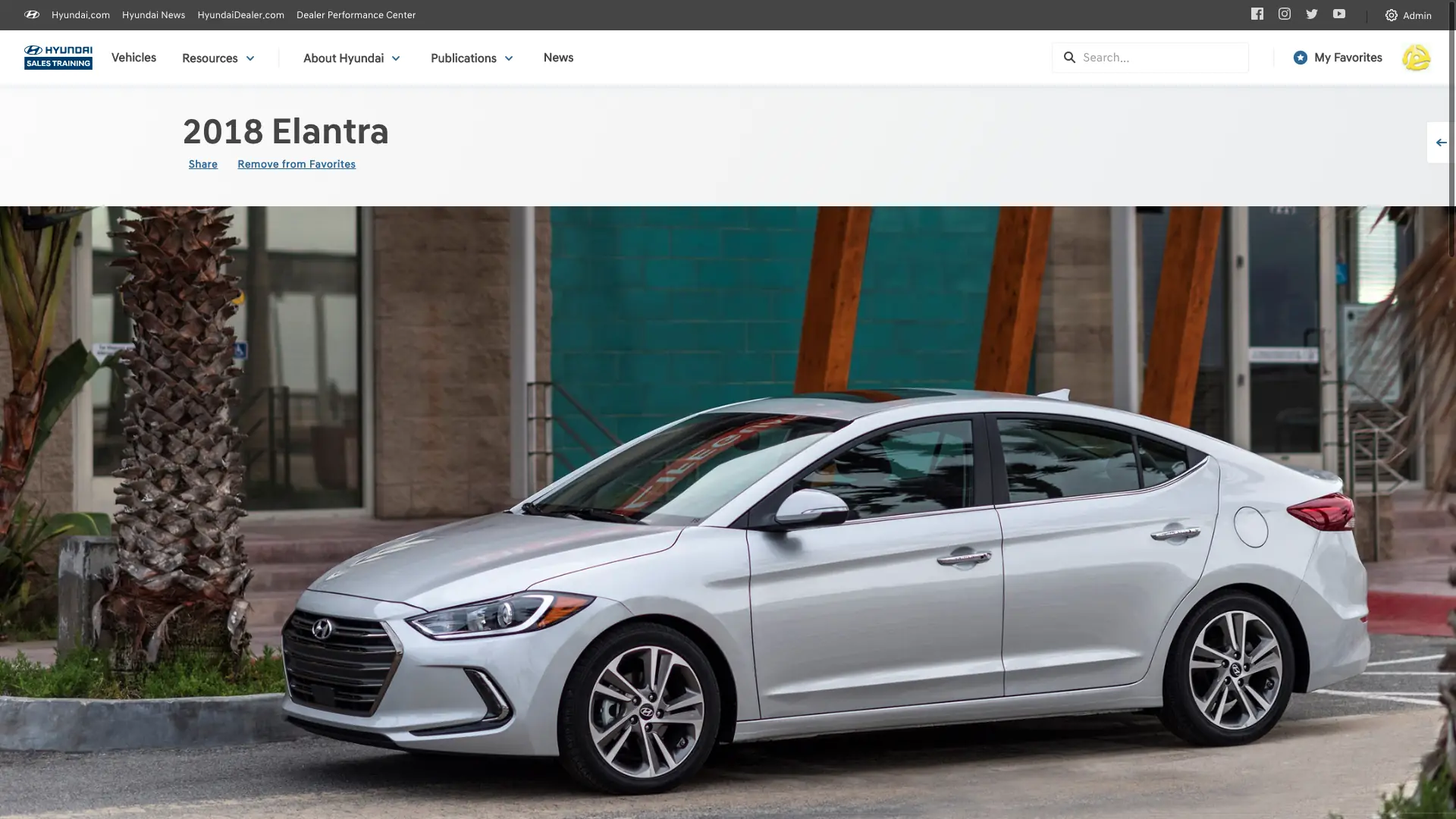
Sales professionals could learn about current Hyundai vehicles and trim levels, access product overviews and video-based training, complete courses and exams, satisfy prerequisites, track progress and scores, maintain certification status, and stay informed about Hyundai programs and organizational activity. Administrators could monitor learning and certification activity through reporting capabilities built into the platform.
Empowering Hyundai’s Training Teams
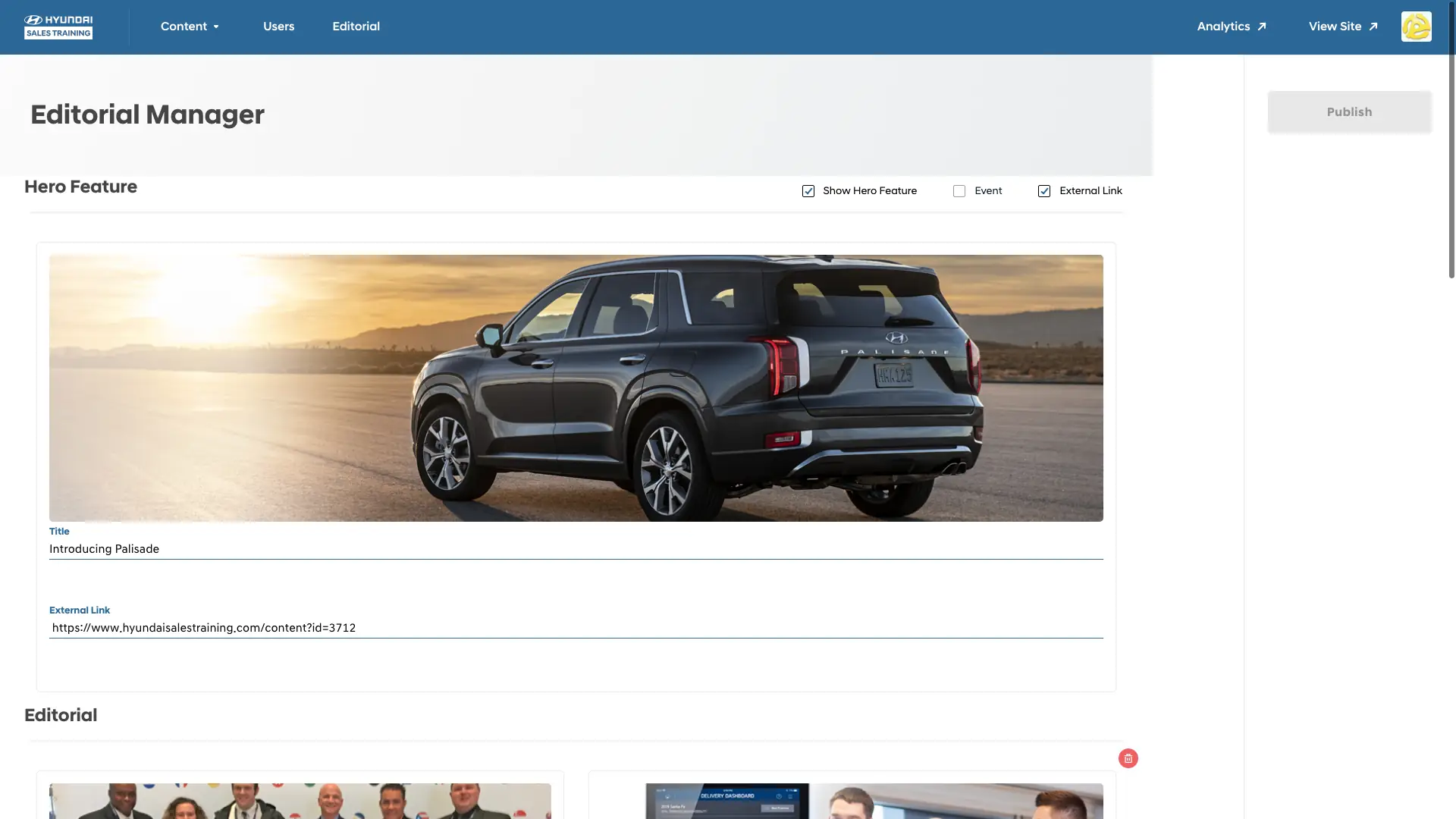
A major part of the product strategy was giving Hyundai’s own training experts control over the material they were responsible for creating and maintaining. The custom CMS enabled those teams to manage training content and programs directly rather than depending on developers for routine publishing and content updates.
This was particularly important for an automotive organization where vehicle information, model and trim details, product education, courses, videos, certifications, and other learning materials continually evolve. The CMS gave Hyundai a sustainable operational model for keeping the platform current while the learner-facing application provided a consistent experience for the sales organization.
Launch at Enterprise Scale
Replacing an established enterprise platform meant that launch readiness was as important as feature delivery. I developed schedules and milestones around the MVP, coordinated the team through production and testing, worked with Hyundai stakeholders on release planning, and made sure the product was prepared for a large user population immediately after launch.
The result provided an immediate validation of that work. During its first weekend online, the new platform served 31,000 unique users without issue and performed as intended. For a ground-up replacement of a platform supporting a nationwide sales organization, that first weekend was an important measure of both product delivery and launch readiness.
From MVP to Continuous Product Development
Launch was not the end of my ownership. I continued managing the product roadmap and release cycle for approximately a year after the MVP, working with Hyundai stakeholders and the delivery team to evolve the platform based on organizational priorities, user behavior, and production data.
Analytics became part of that ongoing product process. We used behavioral and usage data to understand how people interacted with the platform, inform product decisions, and identify opportunities for improvement. We also developed A/B testing strategies so changes could be evaluated against user behavior rather than relying solely on assumptions.
This created a continuous product cycle: stakeholder needs and user behavior informed prioritization, priorities became roadmap decisions, releases generated new data, and that data helped shape subsequent iterations.
Product Impact
Hyundai Sales Training transformed a legacy training experience into a purpose-built enterprise product supporting the ongoing education and certification of Hyundai’s sales organization. The platform gave learners a central destination for vehicle knowledge, courses, exams, certifications, video training, progress, and organizational information while giving Hyundai’s training experts direct control over the content and programs they managed.
For me, the engagement brought together the responsibilities that define strong digital product leadership: discovery, stakeholder management, requirements, prioritization, roadmap development, Agile delivery, multidisciplinary team leadership, launch planning, analytics, experimentation, and continued product evolution. I did not need to be the engineer writing the application to lead the product effectively. My technical background helped me communicate with engineering and understand implementation constraints, while my primary responsibility remained connecting Hyundai’s business and training needs with the team responsible for delivering and evolving the product.